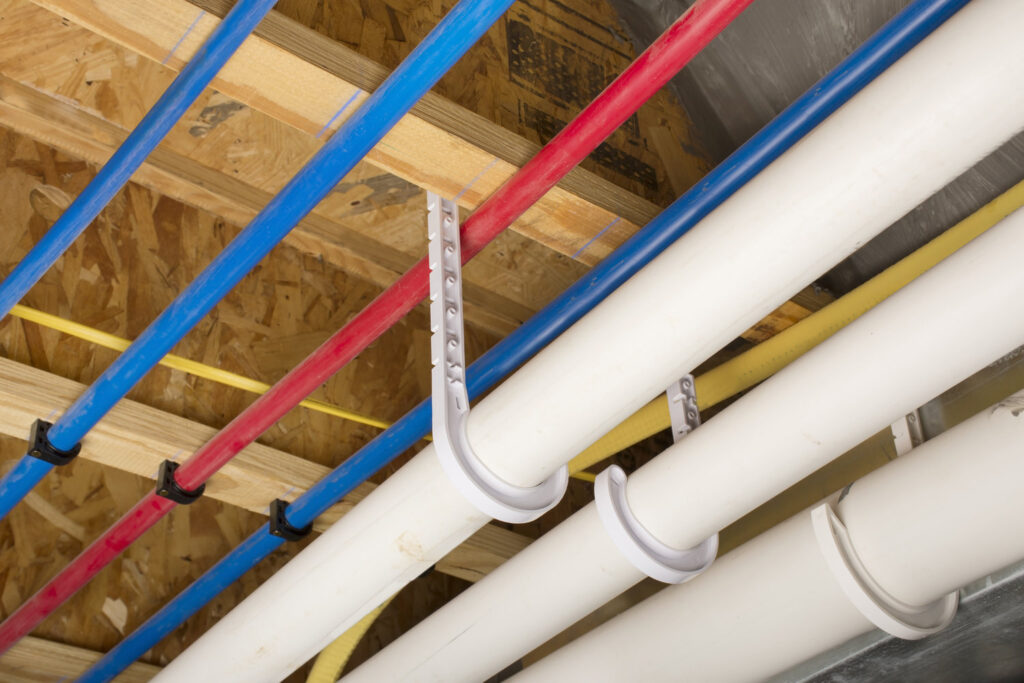
If you own a Florida home built between 1978 and 1995 — especially in Pasco, Hernando, or Pinellas County — there’s a real chance your walls and ceilings hide a ticking time bomb called polybutylene. And here’s what nobody tells you until renewal time: Florida insurance carriers have quietly added polybutylene to their non-renewal lists. If you’ve got it, your insurer can drop you. Here’s how to identify it, what to do, and what a repipe actually costs in 2026.
What Polybutylene Is (And Why It Was Banned)
Polybutylene (often called ‘Quest’ or ‘PB’ pipe) is a gray, flexible plastic pipe used in residential plumbing from roughly 1978 to 1995. It was cheap, easy to install, and looked like a miracle product — until it started failing en masse. Chlorine and chloramines in municipal water react with the plastic, causing it to flake from the inside out. The failures triggered the largest class-action settlement in plumbing history. Manufacturing stopped in the mid-1990s. The pipe is still in millions of U.S. homes — many of them right here in Pasco County.
Why Florida Insurers Are Non-Renewing Polybutylene Homes
In 2024-2026, several major Florida carriers (Citizens, Universal, Florida Peninsula, Heritage, and others) updated their underwriting guidelines to flag polybutylene as a non-insurable risk. Reason: the failure rate is too high and the claim payouts (water damage, mold, contents) are too expensive. If your inspection report lists polybutylene, your renewal letter may include a 60-day notice to replace the system or lose coverage. This is happening now, not someday.
How to Spot Polybutylene in Your Hudson, Spring Hill, or Trinity Home
You’re looking for three things:
1) Color — Gray (most common), occasionally blue or black. Never white, copper, or red/blue PEX.
2) Texture — Smooth, flexible, plastic-y. Not rigid like CPVC or PVC.
3) Stamp — Most polybutylene is stamped ‘PB2110’ along the length. Look at the shutoff valves under sinks, behind toilets, at the water heater, and at the manifold near the main shutoff.
The 5-Minute Inspection You Can Do Right Now
Step 1: Open the cabinet under your kitchen sink. Look at the supply lines coming through the back wall.
Step 2: Open the access panel behind your washing machine.
Step 3: Look at the lines feeding your water heater.
Step 4: Check the main shutoff inside the garage or near the front exterior wall.
Step 5: If you see gray plastic pipe with crimped copper or plastic acetal fittings — you have polybutylene. Take photos. Call us.
What Polybutylene Failure Looks Like (Before It Floods)
The pipe fails from the inside out, so visual inspection of the outside is unreliable. Warning signs: small white or chalky deposits at fittings (the plastic is degrading), discolored water for the first few seconds at any tap, slow pinhole leaks at joints, and brittle-feeling pipes when you flex them gently. If you see any of this, the failure has already started — you’re on borrowed time.
Whole-House Repipe Cost in Pasco County (2026 Pricing)
Here are honest 2026 numbers for a polybutylene-to-PEX repipe in the Hudson/Spring Hill/Trinity area:
• 1,500 sq ft, 2 bath: $4,500-$6,500
• 2,000 sq ft, 2.5 bath: $5,500-$7,500
• 2,500 sq ft, 3 bath: $6,500-$8,500
• 3,000+ sq ft, 3.5+ bath: $8,500-$11,500
What’s included: all hot and cold supply lines from the meter to every fixture, new shutoff valves, drywall patching (texture matched, paint by you or your handyman), permit, and inspection. Timeline: 2-4 days. Water off only during active work hours.
Why PEX Is the Right Replacement (Not Copper)
We get this question every week. For polybutylene replacement in Florida, PEX wins every time:
• Cost: PEX repipe runs $2,000-$3,000 less than copper for the same square footage.
• Performance: PEX doesn’t corrode from Florida’s hard water or chlorine. Copper does — that’s how we got slab leaks in the first place.
• Insurance: Every Florida carrier accepts PEX. None will drop you for it.
• Lifespan: PEX is rated 40-50+ years. Florida copper rarely makes it past 25-35 in our water chemistry.
Documenting the Repipe for Your Insurance Carrier
When we finish a Devil Dogs Plumbing repipe, you walk away with: a permit number from Pasco County (or Hernando/Pinellas), a final inspection certificate, a written certification letter on Devil Dogs letterhead confirming polybutylene removal, photo documentation before and after, and the manufacturer’s PEX warranty. Send all five to your insurance agent. Your renewal goes back to standard underwriting.
Why This Beats Other Pasco County Plumbers
Most plumbers will quote you a repipe in one paragraph. We give you a written scope of work, line-item pricing, fixture count, permit info, and the insurance documentation package upfront — before you commit a dollar. Veteran-owned, owner-operated, and we still answer the phone ourselves.
Why This Beats Competitors
Other Pasco plumbers hand you a one-line repipe quote and disappear. We hand you a scope of work, line-item pricing, permit info, and the insurance documentation package upfront — before you commit a dollar.
📞 Hudson, FL Plumbing — Call Now
for a free polybutylene inspection
Call (727) 858-9622
5.0★ on Google · 77+ verified reviews · USMC Veteran-Owned · FL Licensed CFC1433664
Frequently Asked Questions
Q: How do I know for sure if I have polybutylene pipes?
A: Check under sinks and at the water heater. Look for gray plastic pipe stamped ‘PB2110’. If you’re not sure, we offer a free 30-minute inspection in Hudson, Spring Hill, and Trinity.
Q: Will my insurance company actually drop me for polybutylene?
A: Several major Florida carriers already are. If your renewal inspection flags it, you typically get 60 days to replace or lose coverage. We’ve seen it happen in Pasco, Hernando, and Pinellas this year.
Q: How long does a whole-house repipe take?
A: 2-4 days for most Pasco County homes. Water is on outside of active work hours. You don’t have to move out.
Q: Do I have to replace drywall after the repipe?
A: We patch and texture-match all access cuts as part of the price. Paint is typically not included — most homeowners hire a painter for $300-$600 to finish the job.
Q: Is PEX safer than copper for Florida water?
A: Yes. Florida hard water and chlorine corrode copper from the inside. PEX is immune to both. Every Florida insurance carrier accepts PEX. It’s the standard for new construction in 2026.
Q: Can I get a free polybutylene inspection?
A: Yes. Call (727) 858-9622. We come out, ID your plumbing, and give you a written repipe quote if needed — no charge, no high-pressure sales.
Related Reading
- 7 Signs You Have a Slab Leak in Your Hudson, FL Home —
- PEX vs. Copper Repipe in Florida: The Honest Trade-Off —
- Whole-House Repipe — Hudson, FL Service Page —
Semper Fidelis — The Devil Dogs Difference